
The Meaning of the Antigua and Barbuda Flag
Every element of the Antigua and Barbuda flag — the rising sun, the V, the colours, the geometry — was deliberate. A short essay on what the flag actually means, by the family who designed it and the nation that adopted it.
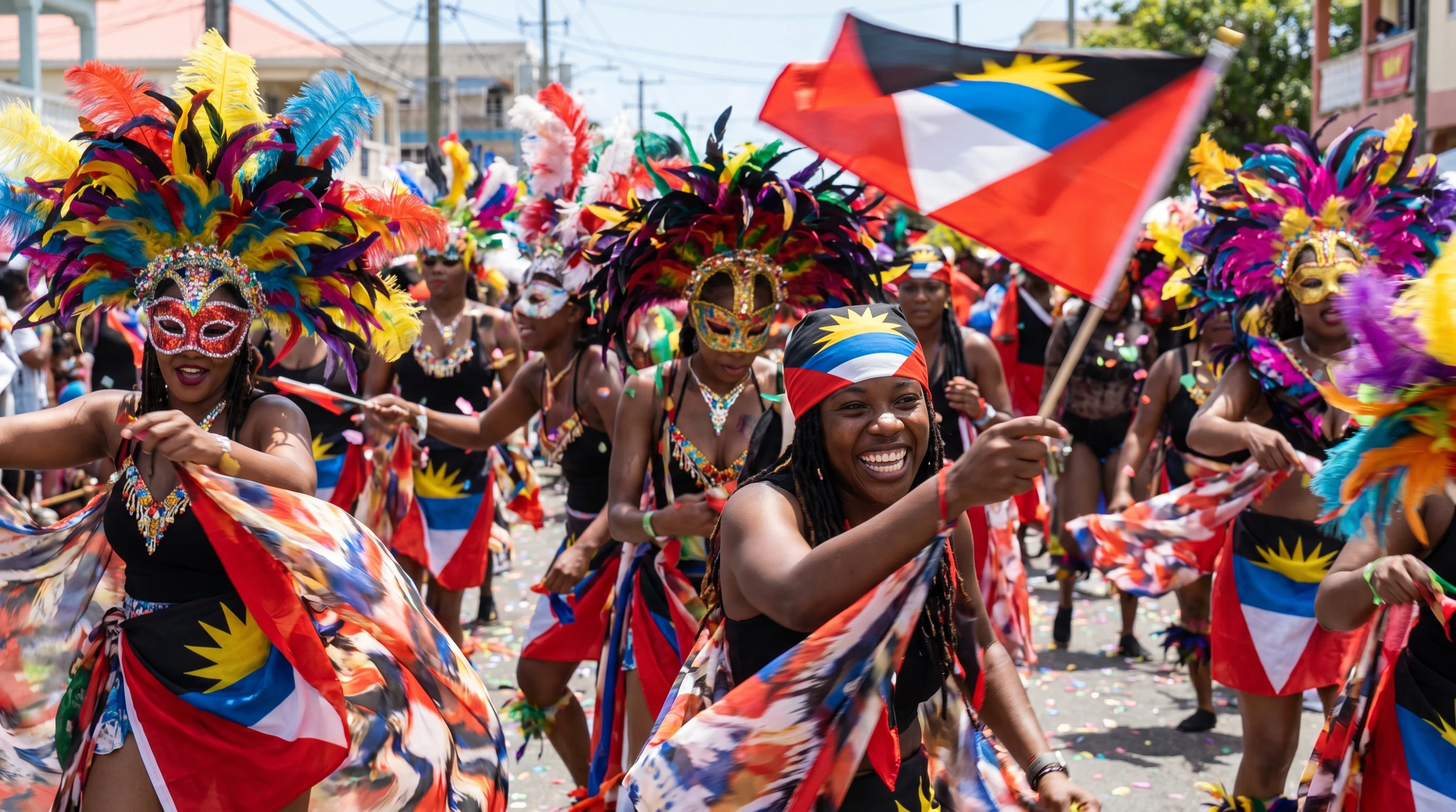
Masquerade troupes parading at Antigua Carnival in St John's.
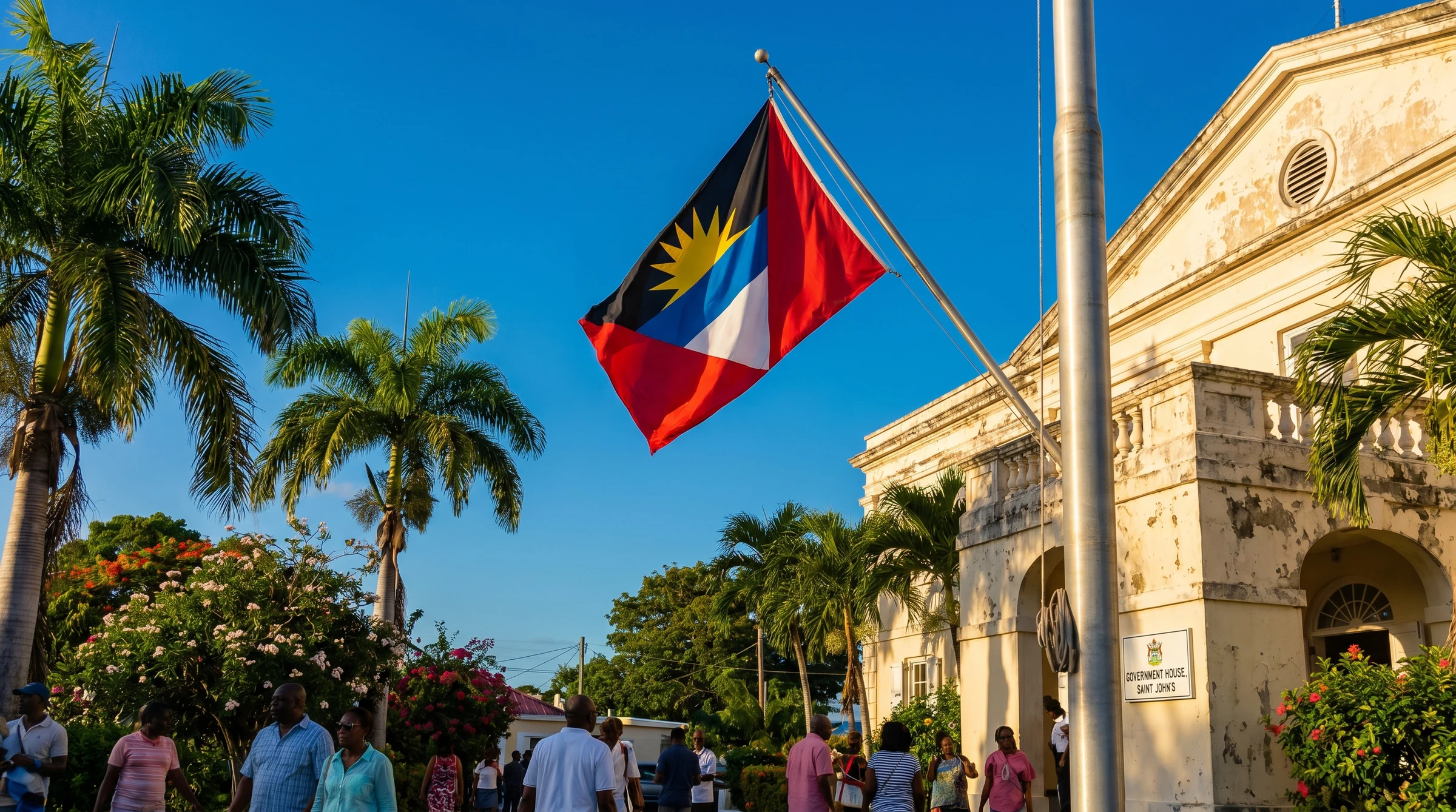
The flag of Antigua and Barbuda was adopted on 27 February 1967, the day the nation moved from a Crown Colony to an Associated State of the United Kingdom — a step toward the full independence that followed in 1981. It is one of the few national flags in the world whose every visual element was chosen by competition. A schoolteacher in St John’s named Sir Reginald Samuel submitted the winning design, beating six hundred entries. The flag he drew is the flag the country still carries today.
The Rising Sun
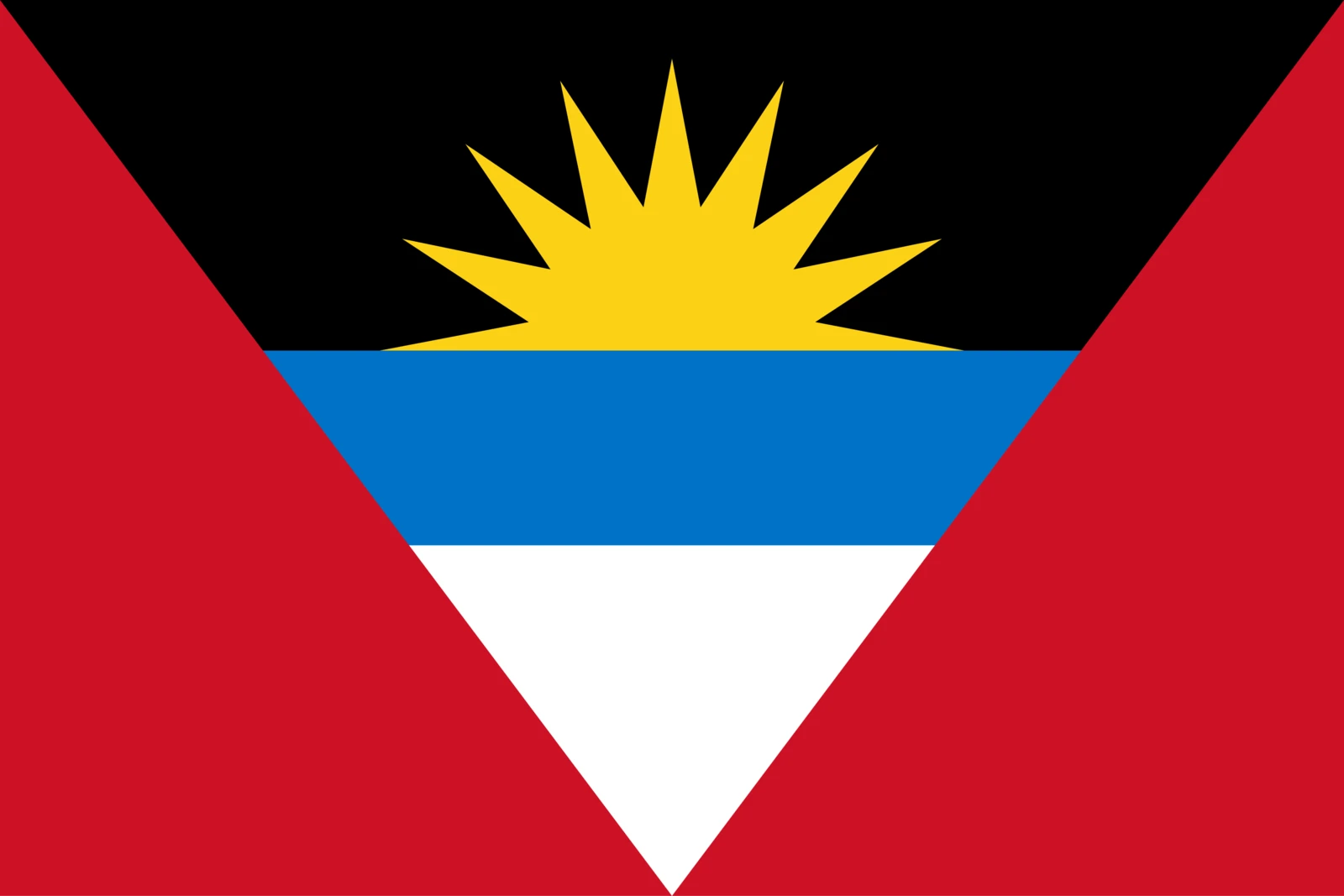
At the centre, a half-disc sun rises from a horizon. It is the visual anchor — the first thing the eye lands on. The sun stands for the dawn of a new era, the country’s emergence from colonial governance into self-determination. It is golden because gold, in the Caribbean iconography, is the colour of the soil at first light and of the sugar crop the country was built on. The rays of the rising sun are seven — a deliberate count, not a stylistic accident.
The Black Field
The sun rises out of a horizon of black. Black on national flags is often misread — interpreted as solemnity, or absence. In the Antigua and Barbuda flag, it carries a different weight. It stands for the African heritage of the majority of the nation’s people. It is not an apology and it is not an afterthought. It is the foundational layer of the design, and every other colour above it is built on top.
The V — for Victory
Around the sun, framing it on both sides, is a wide red V that opens upward toward the corners of the flag. The V was chosen for victory — the formal celebration of the country’s emergence from colonial status. The red is deep, the same red that appears in the British, French, and several Caribbean flags. It is a Commonwealth red — recognisable, traditional, and chosen with full awareness of its lineage.
The Bands of Blue and White
Below the rising sun, separated by a thin white band, lies a wider strip of deep blue. The white is the band of beaches that ring both Antigua and Barbuda — and the most famous beaches of Barbuda are pink, but the artistic choice of white is the universal Caribbean shorthand for sand. The blue beneath is the Caribbean Sea. It is the same colour family as the deep blue of the flag’s geographic neighbours, but slightly more saturated — deliberately distinctive.
The Geometry
The flag is not symmetrical. The sun is offset upward; the red V opens upward; the blue band sits at the bottom; the black field sits at the top. The whole composition reads, in iconographic terms, like the country itself: sun, sea, sand, people. From sky to soil, the elements are stacked in the order they appear when you stand on an Antiguan beach at first light and look out.
It is, in the strictest sense of the word, a literal flag. Other Caribbean nations have flags built from coats of arms and political abstractions. Antigua and Barbuda chose a flag that is also a landscape painting.
What It Stands For Today
A national flag is rarely about the past. It carries, more than anything, the country’s idea of itself in the present. The flag of Antigua and Barbuda, in 2026, says: this is a young Commonwealth nation, built on African heritage, rising out of colonial history, defined by its sea and its sand, and quietly confident in its emergence.
For citizens by investment — including those who acquire Antigua and Barbuda citizenship through a non-refundable contribution to the National Development Fund — the same flag flies. The same passport carries the same emblem. The full rights of citizenship are extended without distinction. The flag that was designed by a schoolteacher in 1967 belongs to every Antiguan and Barbudan equally.
Frequently asked questions
What does the black background on the Antigua and Barbuda flag represent?
The black field stands for the African heritage of the majority of the country’s people. It is foundational rather than mournful — the layer on which every other element of the flag is built.
What does the rising sun on the Antigua and Barbuda flag symbolise?
The rising sun is generally understood to represent the dawn of a new era — the country’s emergence from colonial governance into self-determination. Its gold colour echoes the soil at first light and the sugar crop the economy was historically built on.
What does the V-shape on the Antigua and Barbuda flag mean?
The wide red V framing the sun stands for victory — the formal celebration of the country’s emergence from colonial status in 1967. The red is a recognisable Commonwealth red, chosen with full awareness of its lineage.
What do the red, white, and blue elements on the flag represent?
The red V signifies victory and the energy of the people. The thin white band below the sun represents the beaches that ring both islands, and the deep blue band beneath stands for the Caribbean Sea. Together they read, top to bottom, as sky, sun, sand, and sea.
If you would like to learn about the Antigua and Barbuda Citizenship by Investment programme, or to speak privately about whether the programme fits your circumstances, reach a senior advisor at PassPro.
Have a specific question?
A senior advisor will answer it directly. Free, no obligation.
Begin a Confidential Conversation