
What to Do if the Names on Your Official Documents Don't Match
Discrepancies between the spelling of your name across passports, birth certificates, marriage certificates, and other identity documents can stall a CBI application. Here's how to resolve them cleanly.
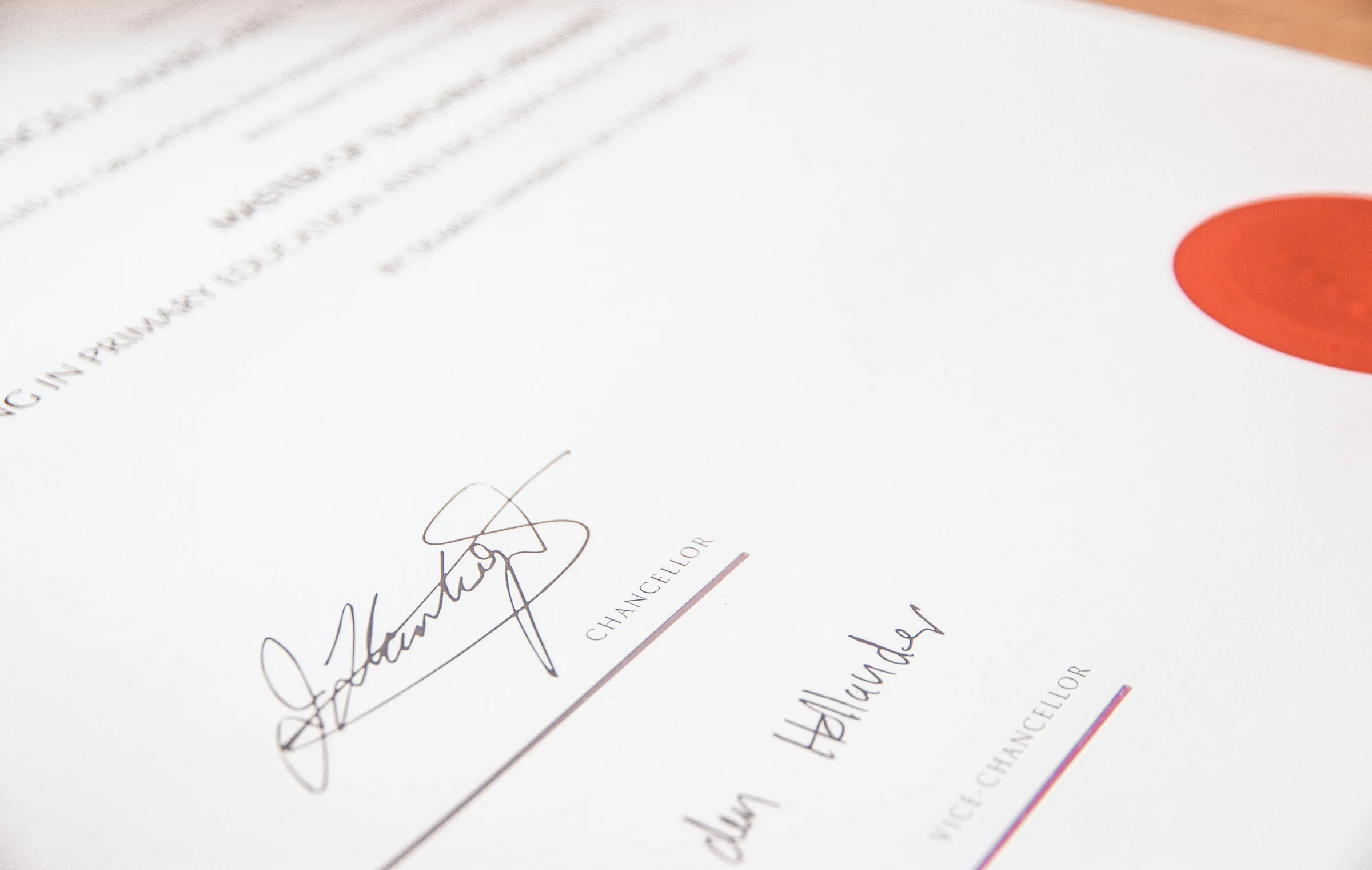
A weathered stack of old paper envelopes resting on a wooden surface.
It is more common than most applicants expect. The name on a birth certificate is spelled one way. The marriage certificate has a slightly different transliteration. The passport renders the same name another way again. These discrepancies are particularly frequent for applicants whose names cross between Arabic, Cyrillic, Mandarin, or other non-Latin scripts and English transliteration — but they occur in Latin-script families too.
For a Citizenship by Investment application, name-document inconsistency is a structural problem. The CBI units cross-reference every document against the others. A mismatch — even an apparent one — can stall the file or, in some cases, cause it to be returned.
This is how to resolve it cleanly.
Why it happens
Three causes account for most discrepancies:
-
Transliteration drift. A name issued in Arabic, Cyrillic, Mandarin, or another non-Latin script is rendered into Latin characters according to the rules of whichever document issuer made the call. Different issuers use different rules. The same name appears as Mohammad, Mohammed, Muhammad, or Mahmoud across different documents.
-
Order and structure. Family naming conventions vary. A name issued in a culture where the family name precedes the given name may be transposed on later documents. Compound surnames may be hyphenated, joined, or separated differently. Middle names may appear in some documents and not others.
-
Genuine clerical error. Sometimes a document was simply issued with a typo. The error sits there until the discrepancy is flagged.
What to do
Step 1: Identify the canonical version. Your current valid passport is typically the canonical reference for international identity purposes. All other documents should reconcile against it. If there is a mismatch with the birth certificate or marriage certificate, the question becomes which document is correct.
Step 2: Determine whether to correct the older document or to issue a sworn statement. For minor transliteration differences, the cleanest path is often a sworn affidavit from a notary public confirming that “John Smith,” “Jonathan Smith,” and “Jon Smith” refer to the same individual, with documentary evidence attached. This is recognised by most CBI units and avoids the months-long process of reissuing source documents.
For more substantive differences — different spellings that genuinely affect identification — the older document may need to be corrected at source through the issuing authority. This is slower (typically 1–2 months) but produces a clean reconciled document.
Step 3: Disclose proactively. Whatever the situation, the worst approach is to submit the file and hope nobody notices. The CBI units’ independent due-diligence providers will notice. They notice everything. The right move is to flag the discrepancy in the application file with the explanation and the resolution evidence attached.
What St. Kitts and Nevis specifically allows
Among the Caribbean programmes, St. Kitts and Nevis explicitly offers a post-grant name correction service for citizens whose Certificate of Naturalization and passport have been issued with spelling discrepancies relative to their source documents. The correction process takes approximately 1–2 months and is detailed on our Lifetime with PassPro page.
How PassPro handles this
Early in our process, we screen for name-document discrepancies before they become a problem. We identify which course of action is appropriate — affidavit, source correction, or proactive disclosure — and we coordinate the work. Most discrepancies are resolved in the file preparation phase, before submission, so they never become an obstacle in due diligence.
If you are concerned about a name discrepancy in your documents, raise it with us early. The earlier it’s surfaced, the more cleanly it’s resolved. Reach a senior advisor.

Have a specific question?
A senior advisor will answer it directly. Free, no obligation.
Begin a Confidential Conversation