
The Meaning of the St Lucia Flag
Every element of the St Lucia flag — the cerulean blue, the gold triangle, the black and white arrowhead — was deliberate. A short essay on what the flag actually means.
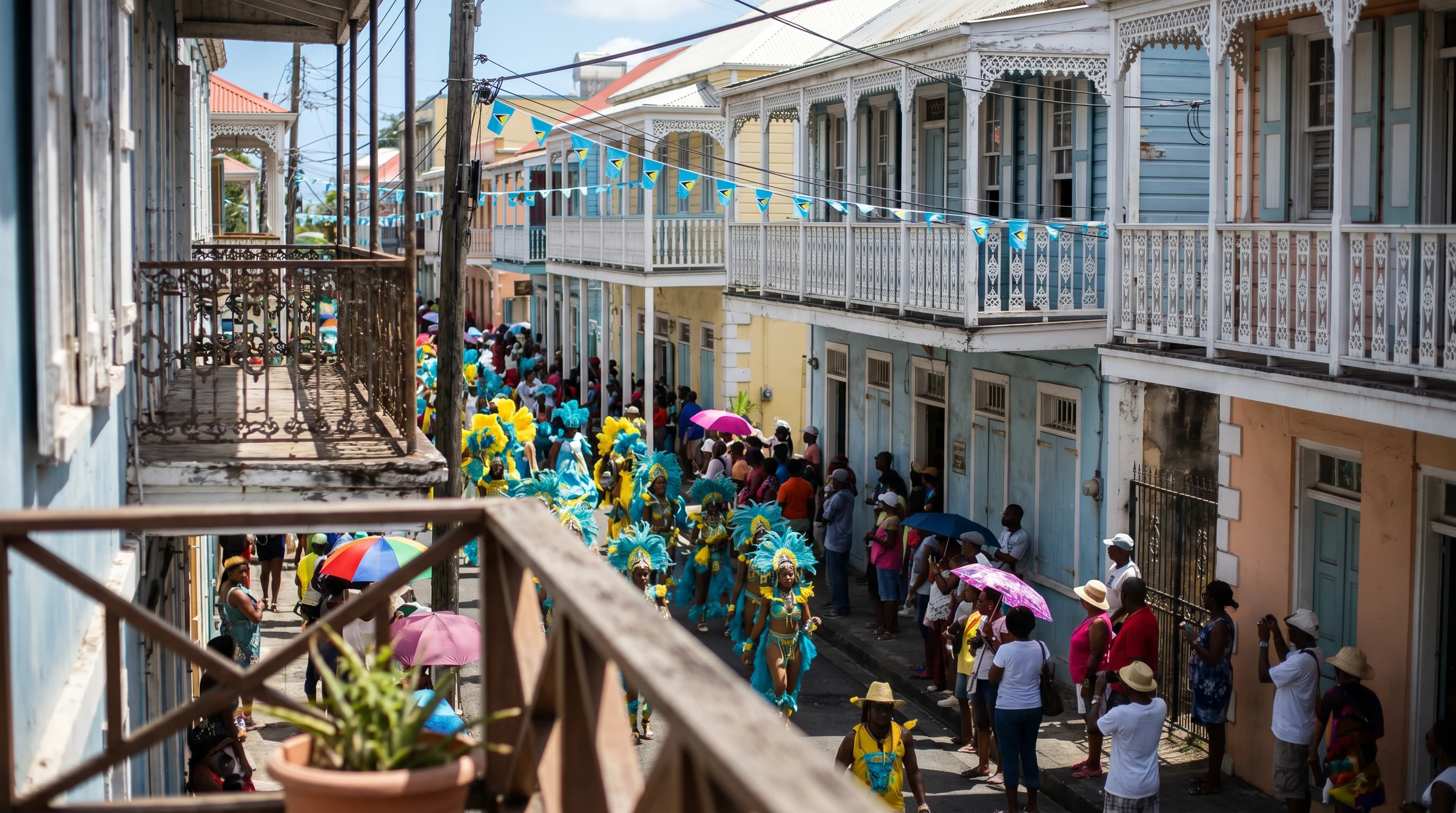
St Lucia Carnival procession winding through the painted balconies of Castries.
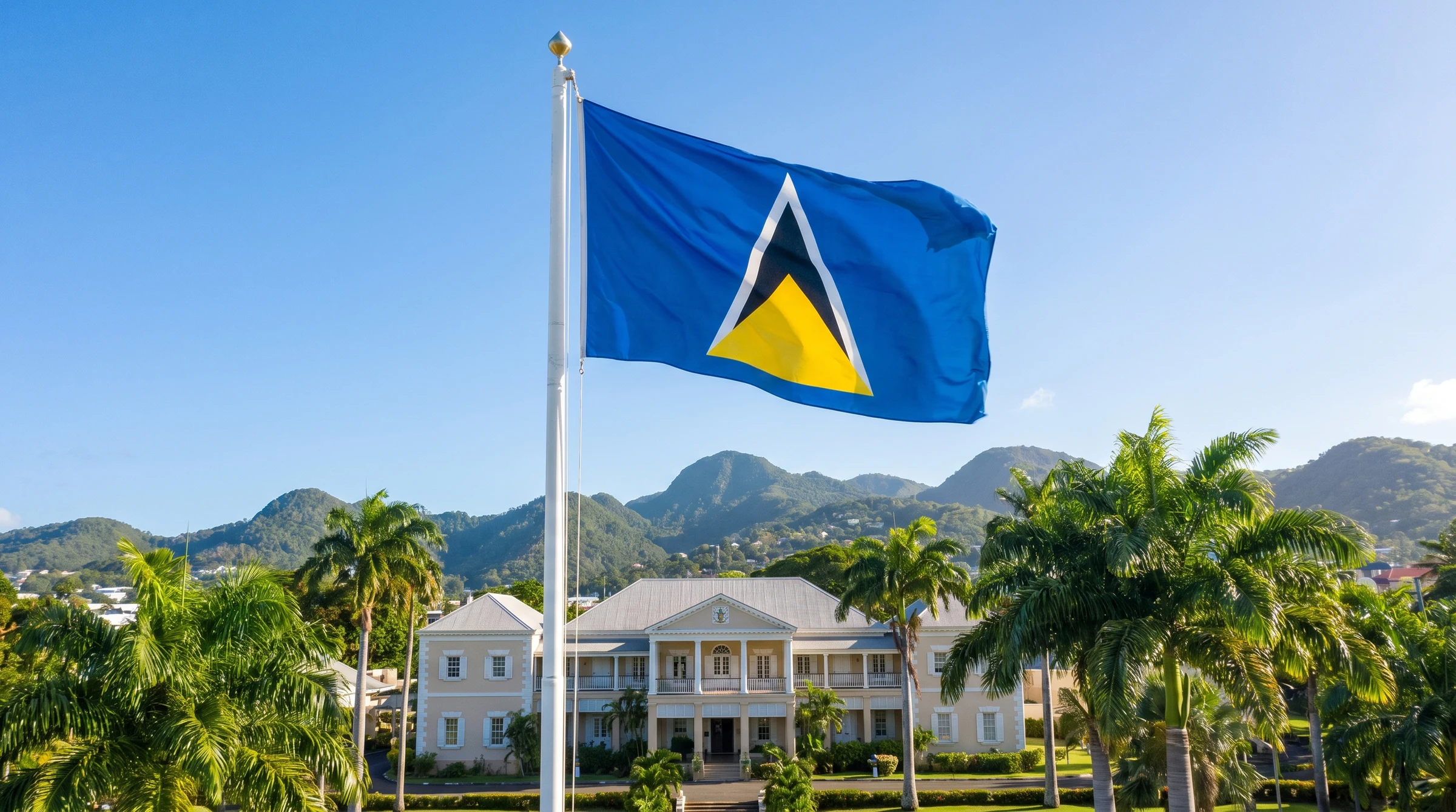
The flag of St Lucia was adopted on 1 March 1967 — the day St Lucia became an Associated State of the United Kingdom — and was retained with minor revisions on the country’s full independence in 1979. It was designed by Dunstan St Omer, the country’s most celebrated artist and a friend and collaborator of the Nobel laureate poet Derek Walcott. St Omer’s flag is widely considered one of the most aesthetically refined national flags in the world.
The Cerulean Blue Field
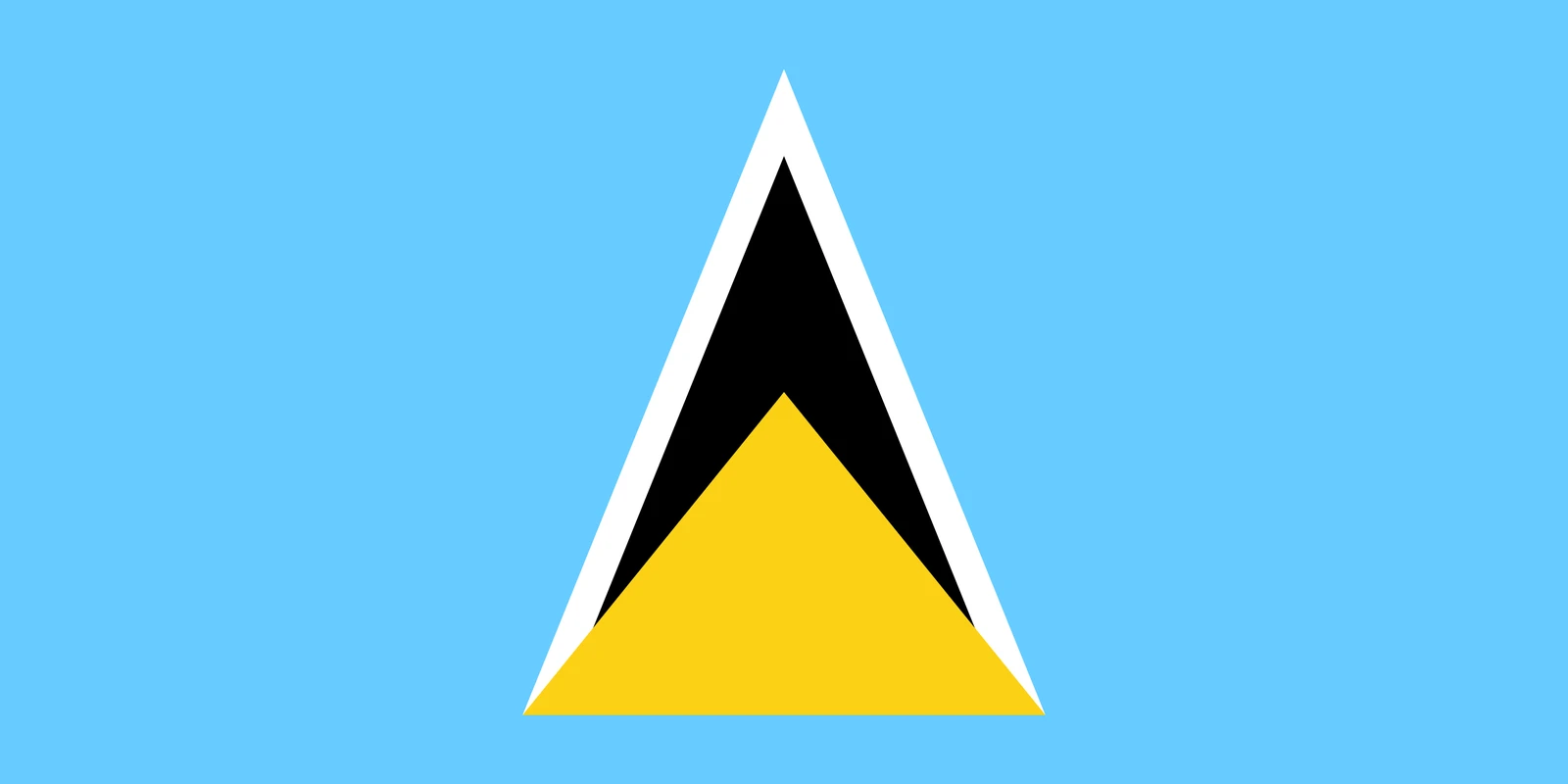
The flag’s background is a distinctive cerulean blue — slightly lighter than the deep navy used by many Caribbean nations, and chosen specifically to evoke the colour of the sky and sea around St Lucia. The shade is unusual; most blue Caribbean flags lean toward marine blue or royal blue, but St Lucia’s is a brighter, more luminous tone — the colour of the Caribbean Sea seen from the high ridges of the country at mid-morning.
The Central Emblem — Three Triangles
At the centre of the flag, three overlapping triangles form a single composite emblem in gold, black, and white.
The largest triangle is gold (yellow), behind the others. It represents the sunshine that defines St Lucia’s climate and its prosperity as a nation.
In front of the gold triangle sits a black triangle, representing the majority African heritage of the people of St Lucia. Black on the flag is foundational; it carries the same weight as on the Antigua and Barbuda, Dominica, and St Kitts flags. It is not absence — it is the colour from which everything else proceeds.
In front of the black triangle, partially overlapping, sits a smaller white triangle. The white represents the European, primarily French and English, influence on the country. Visually, the white sits in front of the black — a deliberate composition. St Omer’s intent was that the white influence is in front, visible, and acknowledged; the black is behind, larger, foundational. The two coexist.
The Pitons
Together, the black-and-white twin triangles form a stylised representation of the Pitons — the two volcanic spires of Gros Piton and Petit Piton that rise out of the Caribbean Sea on the country’s southwest coast. The Pitons are a UNESCO World Heritage Site and the single most recognisable feature of the St Lucian landscape. They are also the country’s most famous emblem internationally — and they are present, structurally, in the centre of the flag.
The Geometry
St Omer’s composition is mathematically refined. The triangles are not arranged casually; their proportions, overlaps, and central placement create a single composite emblem that reads as both a national mountain and a national coat of arms, depending on how the eye approaches it. This is unusual in flag design — most national flags are visually direct; St Lucia’s is intentionally layered, asking the viewer to look more than once.
What It Stands For Today
In 2026, St Lucia is a stable Commonwealth nation with a Citizenship by Investment programme that has grown steadily in standing since its launch in 2015. The country’s mobility passport offers visa-free or visa-on-arrival access to most of Europe, the UK, and large parts of Asia.
The flag carries the country’s identity: the bright Caribbean sky and sea, the African foundation, the European influence, and the Pitons themselves — all assembled into a single composite emblem by an artist whose career is now itself part of the country’s heritage.
For citizens by investment — including those who acquire St Lucia citizenship through a non-refundable contribution to the National Economic Fund, government bonds, or approved real estate — the same flag flies. The full rights of citizenship are extended without distinction.
Frequently asked questions
What do the three triangles on the St Lucia flag represent?
The three overlapping triangles form a single composite emblem. The largest gold triangle represents the sunshine and prosperity of St Lucia. The black and white triangles in front of it together form a stylised representation of the Pitons — the two volcanic spires of Gros Piton and Petit Piton on the country’s southwest coast.
What does the black-and-white symbolism on the St Lucia flag mean?
The black triangle represents the majority African heritage of the people of St Lucia and is foundational to the composition. The white triangle represents the European, primarily French and English, influence on the country. Designer Dunstan St Omer placed the white visibly in front of the larger black to show that both coexist, with the African layer behind and underneath.
What does the blue background on the St Lucia flag represent?
The cerulean blue field represents the sky and the Caribbean Sea around St Lucia. The shade is lighter and more luminous than the marine or royal blues used by many Caribbean nations — chosen to evoke the sea seen from the country’s high ridges at mid-morning.
Who designed the St Lucia flag?
The flag was designed by Dunstan St Omer, the country’s most celebrated artist and a friend and collaborator of the Nobel laureate poet Derek Walcott. It was adopted on 1 March 1967 and retained, with minor revisions, on the country’s full independence in 1979.
If you would like to learn about the St Lucia Citizenship by Investment programme, or to speak privately about whether the programme fits your circumstances, reach a senior advisor at PassPro.
Have a specific question?
A senior advisor will answer it directly. Free, no obligation.
Begin a Confidential Conversation