
The Meaning of the St Kitts and Nevis Flag
Every element of the St Kitts and Nevis flag — the diagonal band, the two stars, the colours — was deliberate. A short essay on what the flag actually means.
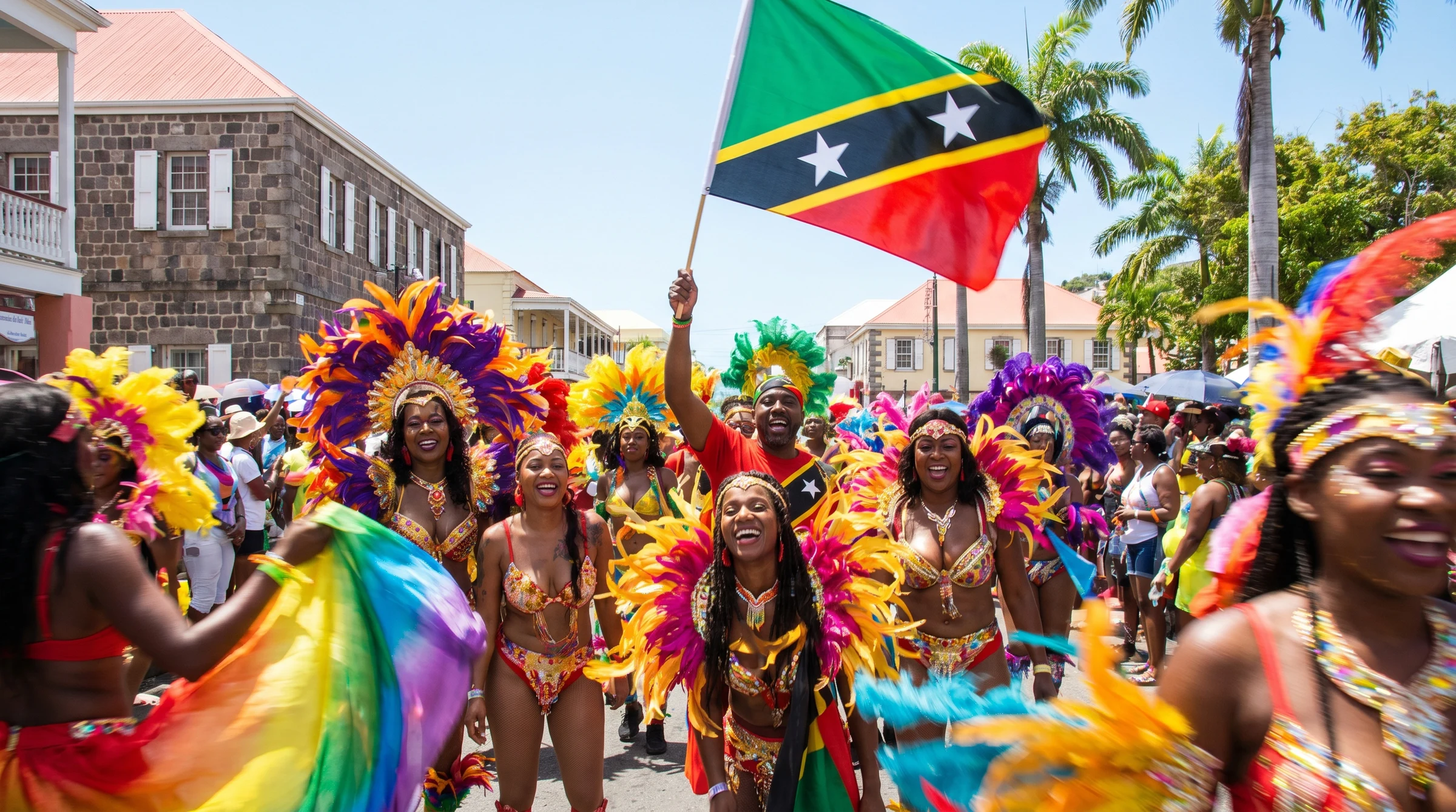
Sugar Mas masquerade in Basseterre.
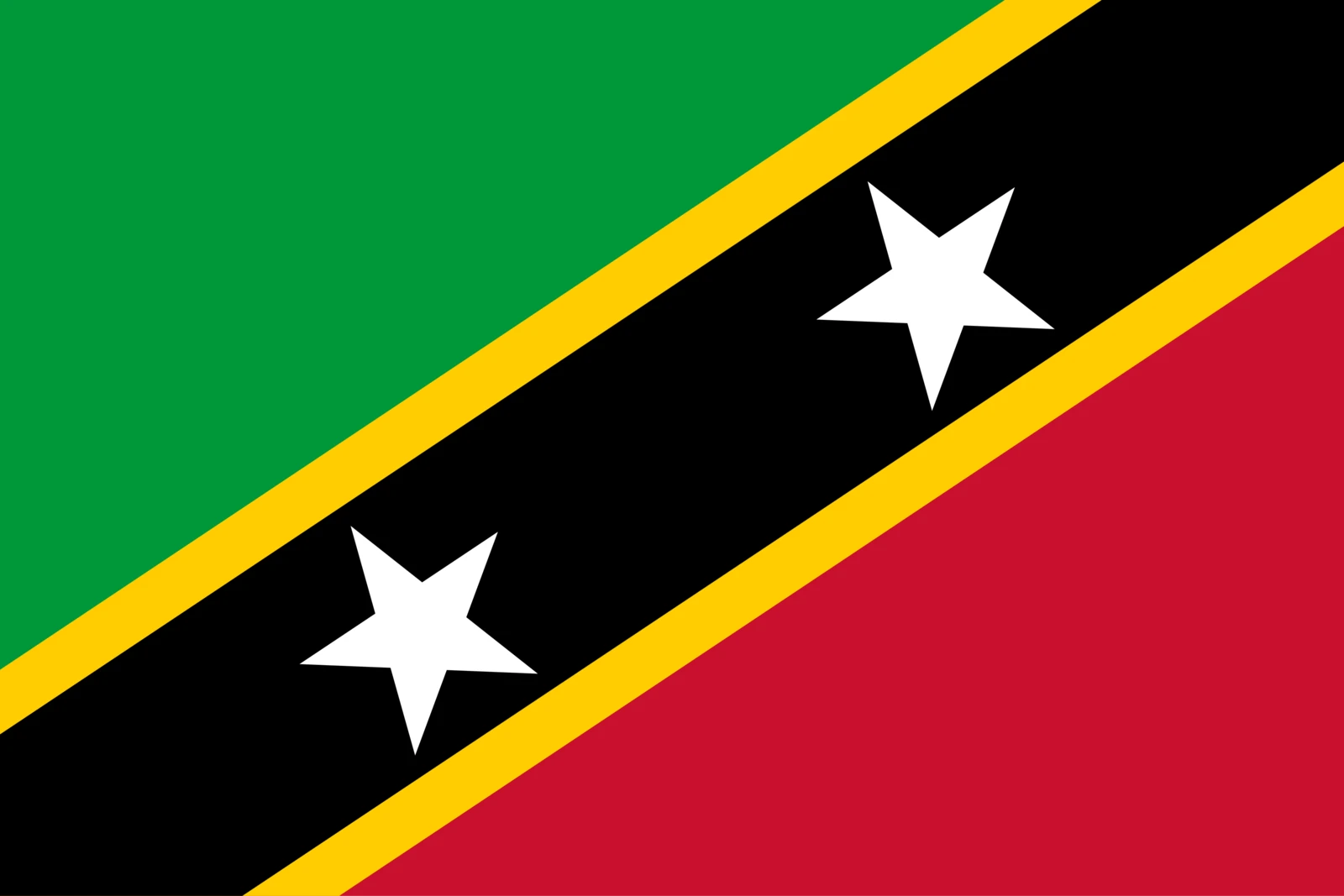
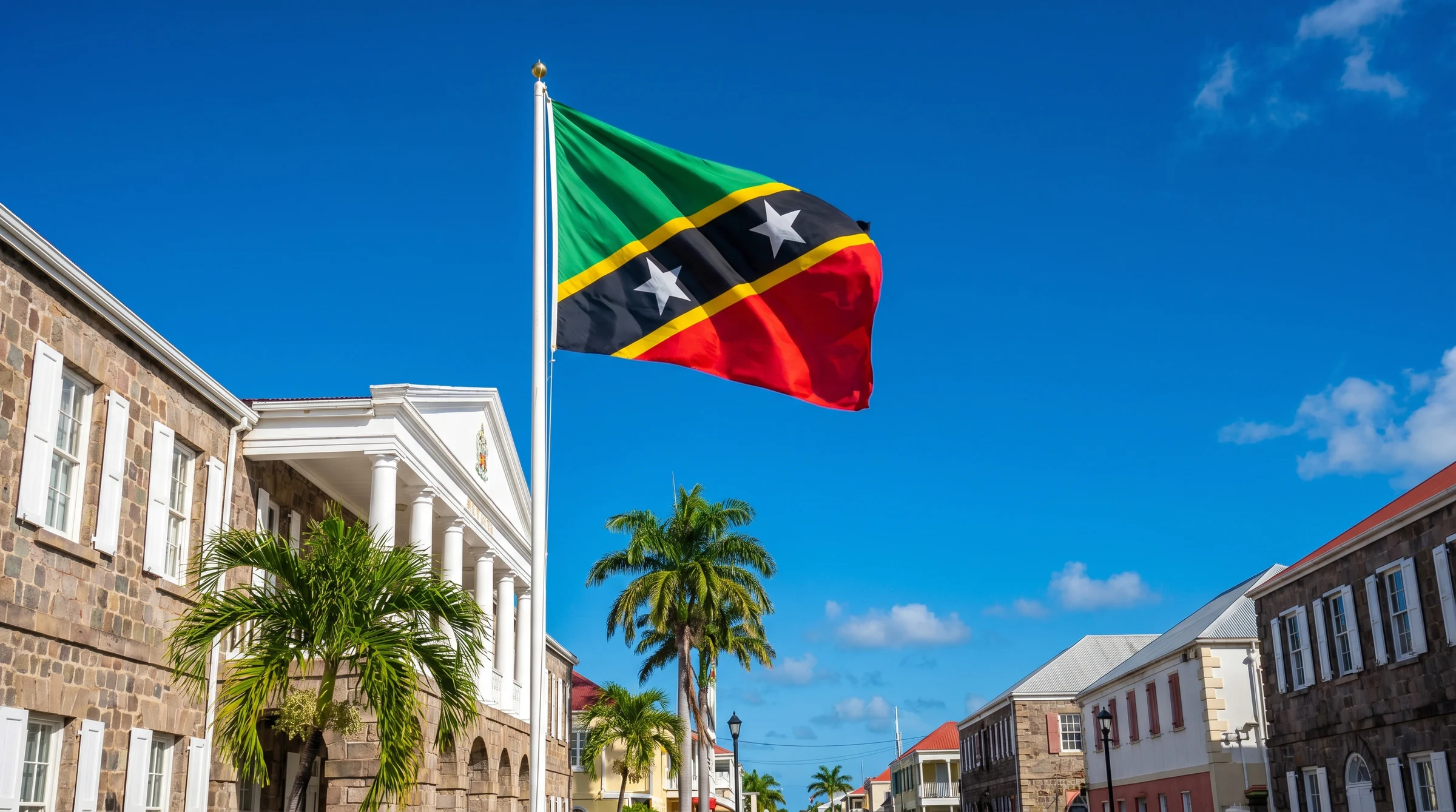
The flag of St Kitts and Nevis was adopted on 19 September 1983, the day the Federation of Saint Christopher and Nevis became fully independent from the United Kingdom. It was designed by Edrice Lewis Liburd, a Kittitian art student, whose submission won a national competition. The composition is one of the most striking in the Caribbean — a diagonal black band, edged with yellow, separating fields of green and red, with two white stars at the centre.
The Diagonal Black Band
The flag’s defining feature is a wide black band that runs from the lower-hoist corner to the upper-fly corner, framed by thinner yellow edges. The band cuts the flag in two, asymmetrically, in a composition borrowed from neither the British heraldic tradition nor the French — a deliberate departure for a Caribbean nation defining itself anew.
The black stands for the African heritage of the country’s people. As on the Antigua and Barbuda and Dominica flags, black here is foundational — not a colour of mourning but of origin. It runs through the centre of the design and carries the two stars that represent the country itself.
The yellow edges of the band stand for sunshine: the bright Caribbean light that frames the country’s days.
The Two Stars
Two white stars sit on the black band, one above the other along the diagonal. They represent the two islands of the federation — Saint Christopher (St Kitts) and Nevis. The stars are equal in size, equally positioned, and explicitly equal in standing. The federation is not “Kitts and its dependent Nevis”; it is two islands together. The white of the stars stands for hope and liberty.
The Green Field
The lower triangle of the flag is green — the colour of the country’s fertile lands. St Kitts was, for centuries, a sugar economy, and the green stands for both the historical sugar fields and the present-day agriculture that continues on both islands.
The Red Field
The upper triangle is red — the colour of the struggle against colonialism and slavery, and of the resolve that defined the country’s path to independence. Red on the St Kitts and Nevis flag is not decorative. It is a deliberate choice to acknowledge the historical cost of the freedom the flag now represents.
What It Stands For Today
In 2026, St Kitts and Nevis is one of the most established and respected Citizenship by Investment programmes in the world — the longest-running of the Caribbean programmes, dating to 1984. The country’s mobility passport is among the strongest in the Eastern Caribbean.
But the flag predates all of that. It marks the moment in 1983 when two small islands became a federation, and the moment they chose, for their own national emblem, a composition built around African origin, the two islands as equal stars, the sun, the soil, and the cost of getting there.
For citizens by investment — including those who acquire St Kitts and Nevis citizenship through a non-refundable contribution to the Sustainable Growth Fund or through approved real estate — the same flag flies. The full rights of citizenship are extended without distinction.
Frequently asked questions
What do the two stars on the St Kitts and Nevis flag represent?
The two white stars represent the two islands of the federation — Saint Christopher (St Kitts) and Nevis. The stars are equal in size and equally positioned, expressing the federation as two islands of equal standing. The white of the stars stands for hope and liberty.
What does the black diagonal stripe on the St Kitts and Nevis flag symbolise?
The wide black diagonal band stands for the African heritage of the country’s people. It is foundational rather than a colour of mourning — it runs through the centre of the design and carries the two stars that represent the federation itself.
What do the yellow, green, and red colours on the flag mean?
The yellow edges of the black band stand for sunshine — the bright Caribbean light that frames the country’s days. The green lower triangle represents the country’s fertile lands and historic sugar economy. The red upper triangle stands for the struggle against colonialism and slavery, and the resolve that defined the path to independence.
If you would like to learn about the St Kitts and Nevis Citizenship by Investment programme, or to speak privately about whether the programme fits your circumstances, reach a senior advisor at PassPro.
Have a specific question?
A senior advisor will answer it directly. Free, no obligation.
Begin a Confidential Conversation