
The Meaning of the Grenada Flag
Every element of the Grenada flag — the bordered field, the seven stars, the nutmeg seed, the colours — was deliberate. A short essay on what the flag actually means.
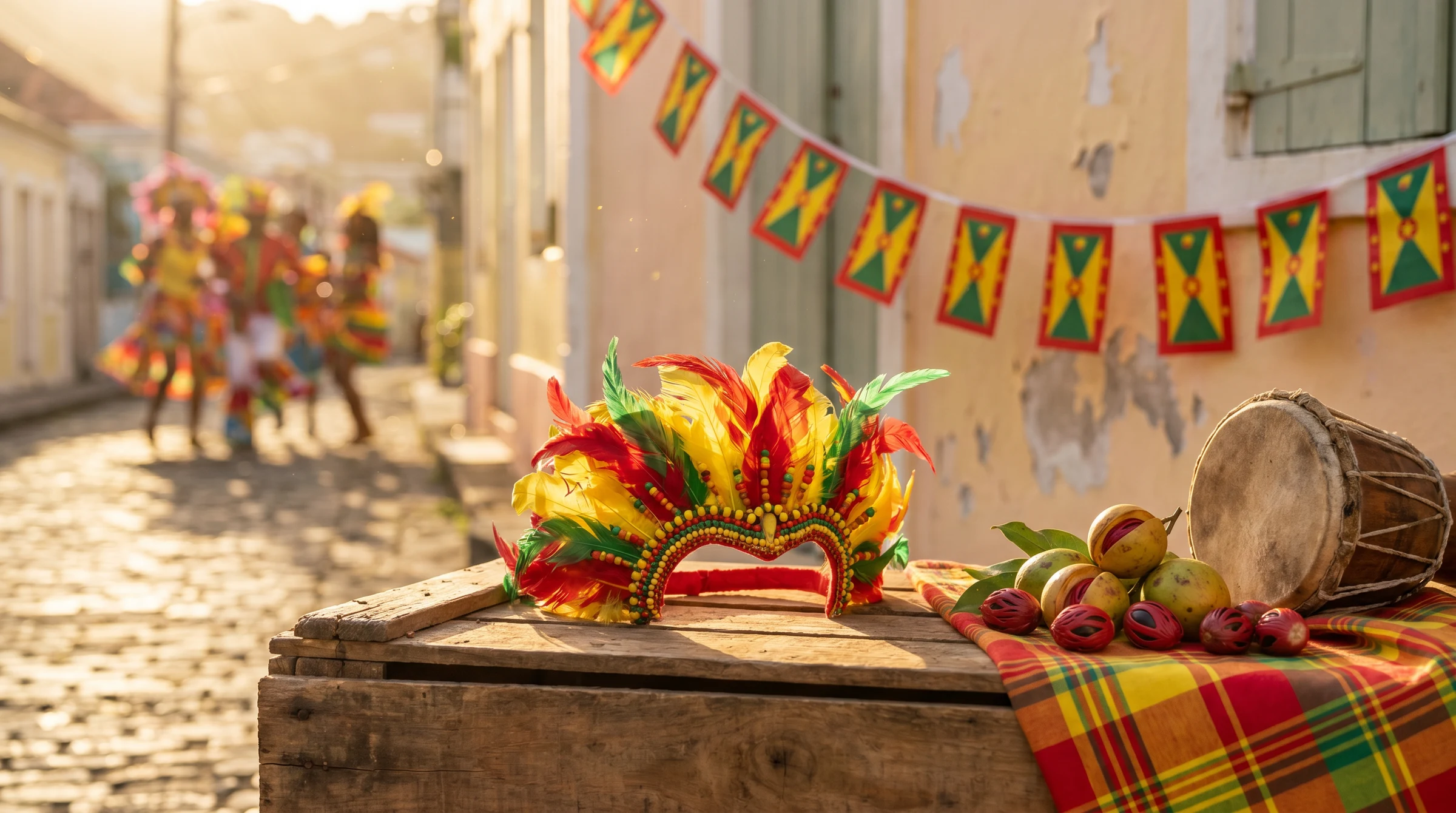
A Spicemas feathered headdress in Grenadian flag colours, set on a wooden crate with bunting.
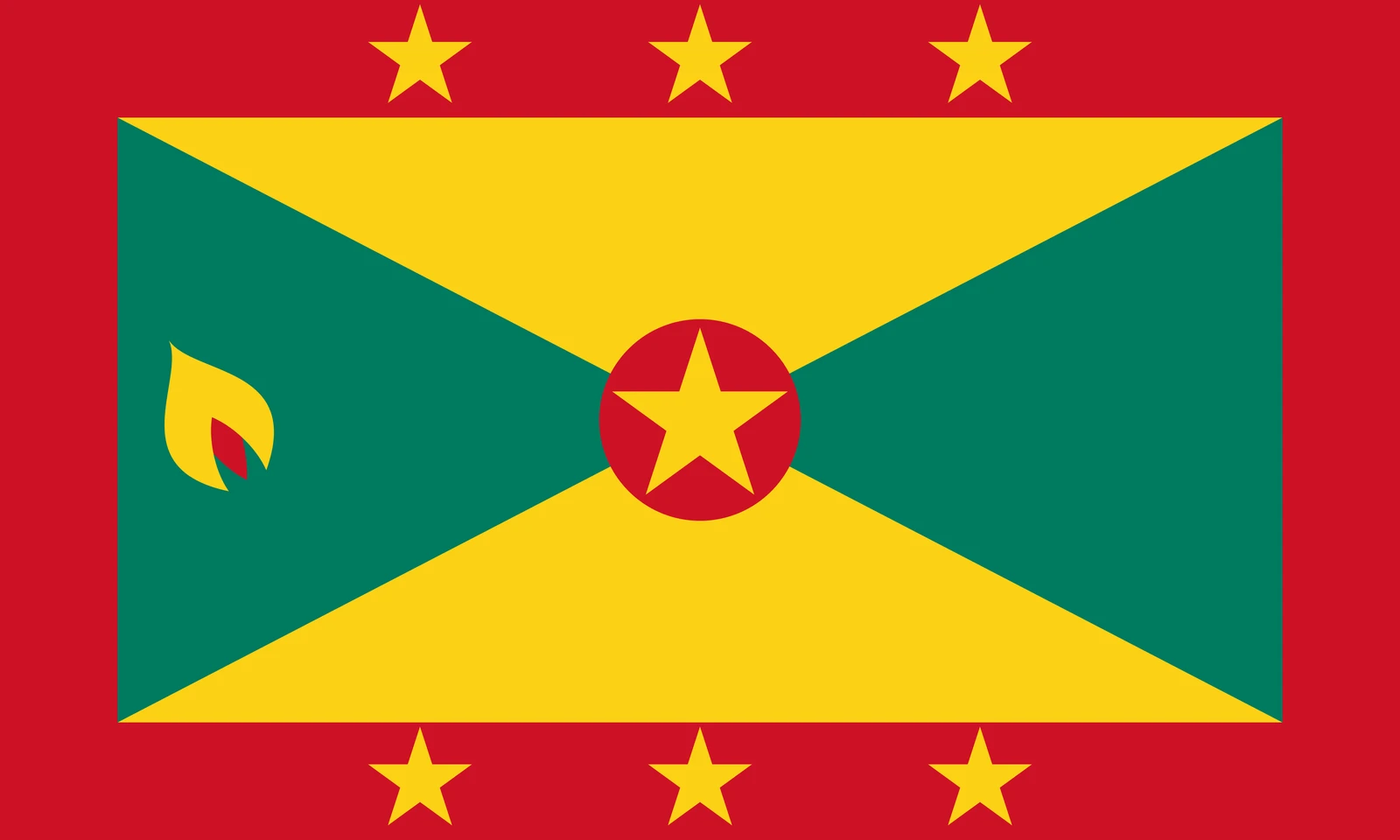
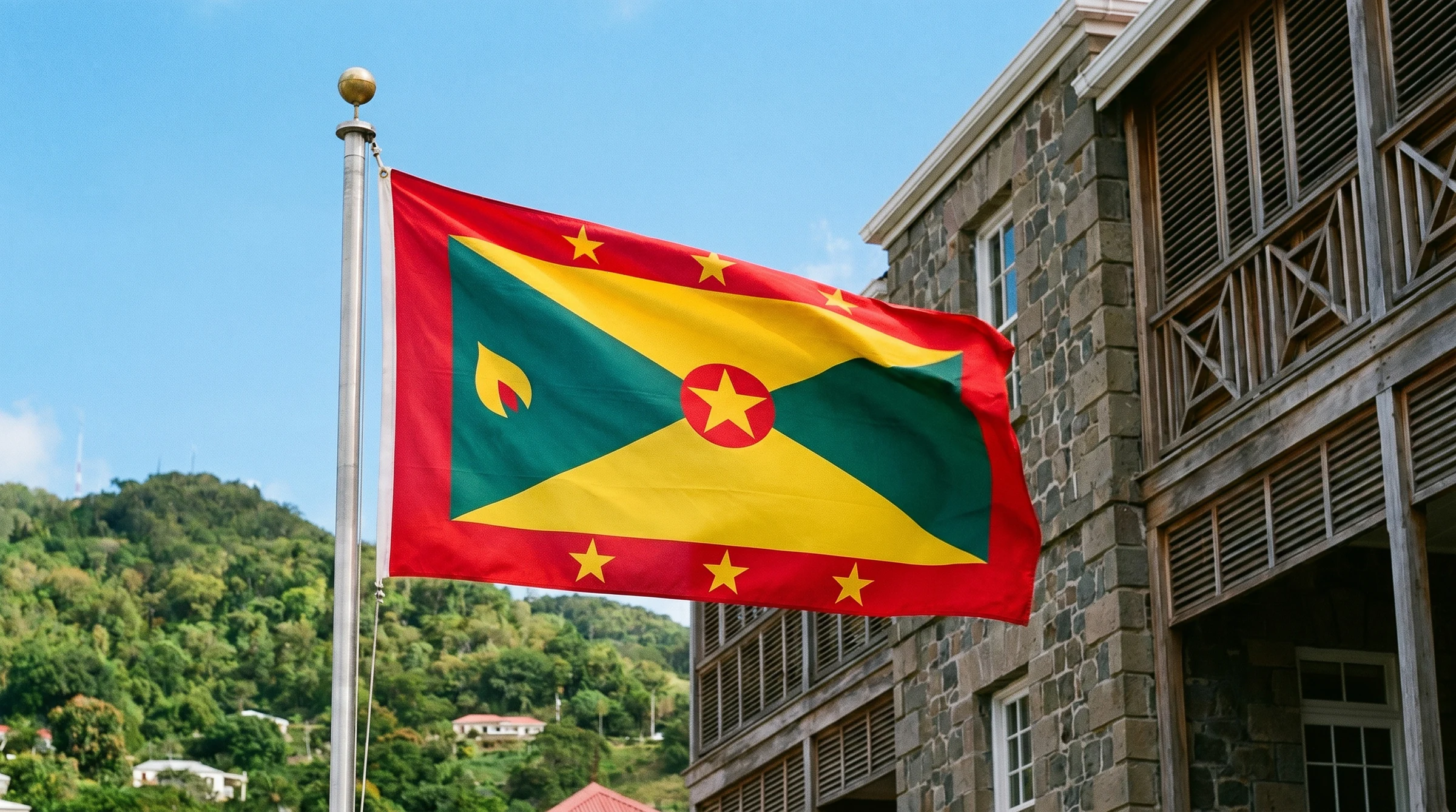
The flag of Grenada was adopted on 7 February 1974, the day Grenada gained independence from the United Kingdom. It was designed by Anthony C. George, a Grenadian artist, and is one of the most visually distinctive flags in the Caribbean — instantly recognisable for its bold geometric composition and for the nutmeg seed that anchors its left side.
The Bordered Field
The flag’s overall composition is divided by a saltire (diagonal cross) of four triangles, framed by a red border. Within the border, six stars sit — three on the top edge, three on the bottom — and a single star sits inside a red disc at the centre. The red border stands for courage and vitality: the qualities required to govern a young nation.
The Triangles — Yellow and Green
The four interior triangles alternate between yellow and green, in a rotational pattern.
The yellow stands for the sun and for the wisdom of the people. It also reflects the rich agricultural heritage of the island — the citrus and other yellow-fleshed produce that Grenada has historically exported.
The green stands for the lush vegetation of Grenada and for the agricultural foundation of the economy. Grenada is among the most fertile islands in the Eastern Caribbean, and its green is the green of cultivation, not wilderness.
The Seven Stars
Six stars appear along the border (three top, three bottom) and one star sits at the centre of the flag, in a red disc. The seven stars represent the seven parishes of Grenada — Saint Andrew, Saint David, Saint George, Saint John, Saint Mark, Saint Patrick, and Carriacou and Petite Martinique together as one parish.
The central star in the red disc represents Saint George’s, the capital. By placing the capital’s star at the centre and surrounding it with the six parishes, the flag is a visual map of the country’s administrative structure.
The Nutmeg Seed
On the left side of the flag, in the green triangle, sits a single stylised nutmeg seed. Grenada is the world’s second-largest producer of nutmeg, and the spice is so central to the country’s identity that Grenada is known internationally as the “Spice Isle.”
The nutmeg’s presence on the flag is more than emblematic. Nutmeg was, for much of the 20th century, the economic backbone of the island — and a 2004 hurricane that destroyed most of the nutmeg trees became a national turning point. The flag predates that storm, but the nutmeg’s continued centrality reflects what the country was, and what it has rebuilt itself to be.
What It Stands For Today
In 2026, Grenada’s economy has diversified well beyond nutmeg — tourism, financial services, and the Citizenship by Investment programme have all grown significantly. But the flag carries the original story: courage at the border, sun and earth in the field, the seven parishes in stars, and the spice at the heart of it.
For citizens by investment — including those who acquire Grenada citizenship through a non-refundable contribution to the National Transformation Fund or through approved real estate — the same flag flies. The full rights of citizenship are extended without distinction, including the right to apply for the United States E-2 Investor Visa, available to Grenadian citizens by virtue of a bilateral treaty.
Frequently asked questions
What does the red border on the Grenada flag represent?
The red border stands for courage and vitality — the qualities understood to be required to govern a young nation. It frames the entire composition and carries six of the flag’s seven stars.
What do the seven stars on the Grenada flag represent?
The seven stars represent the seven parishes of Grenada — Saint Andrew, Saint David, Saint George, Saint John, Saint Mark, Saint Patrick, and Carriacou and Petite Martinique together as one parish. The central star in the red disc represents Saint George’s, the capital.
Why is there a nutmeg on the Grenada flag?
Grenada is the world’s second-largest producer of nutmeg and is known internationally as the Spice Isle. The nutmeg seed on the flag reflects what was, for much of the 20th century, the economic backbone of the country, and remains central to its identity.
What do the red, yellow, and green colours on the Grenada flag mean?
Red stands for courage and vitality. Yellow represents the sun and the wisdom of the people, and reflects the country’s agricultural heritage. Green stands for the lush vegetation of Grenada and the agricultural foundation of its economy — the green of cultivation rather than wilderness.
If you would like to learn about the Grenada Citizenship by Investment programme, or to speak privately about whether the programme fits your circumstances, reach a senior advisor at PassPro.
Have a specific question?
A senior advisor will answer it directly. Free, no obligation.
Begin a Confidential Conversation