
The Meaning of the Dominica Flag
Every element of the Dominica flag — the cross of three bands, the central red disc, the ten stars, the Sisserou parrot — was deliberate. A short essay on what the flag actually means.
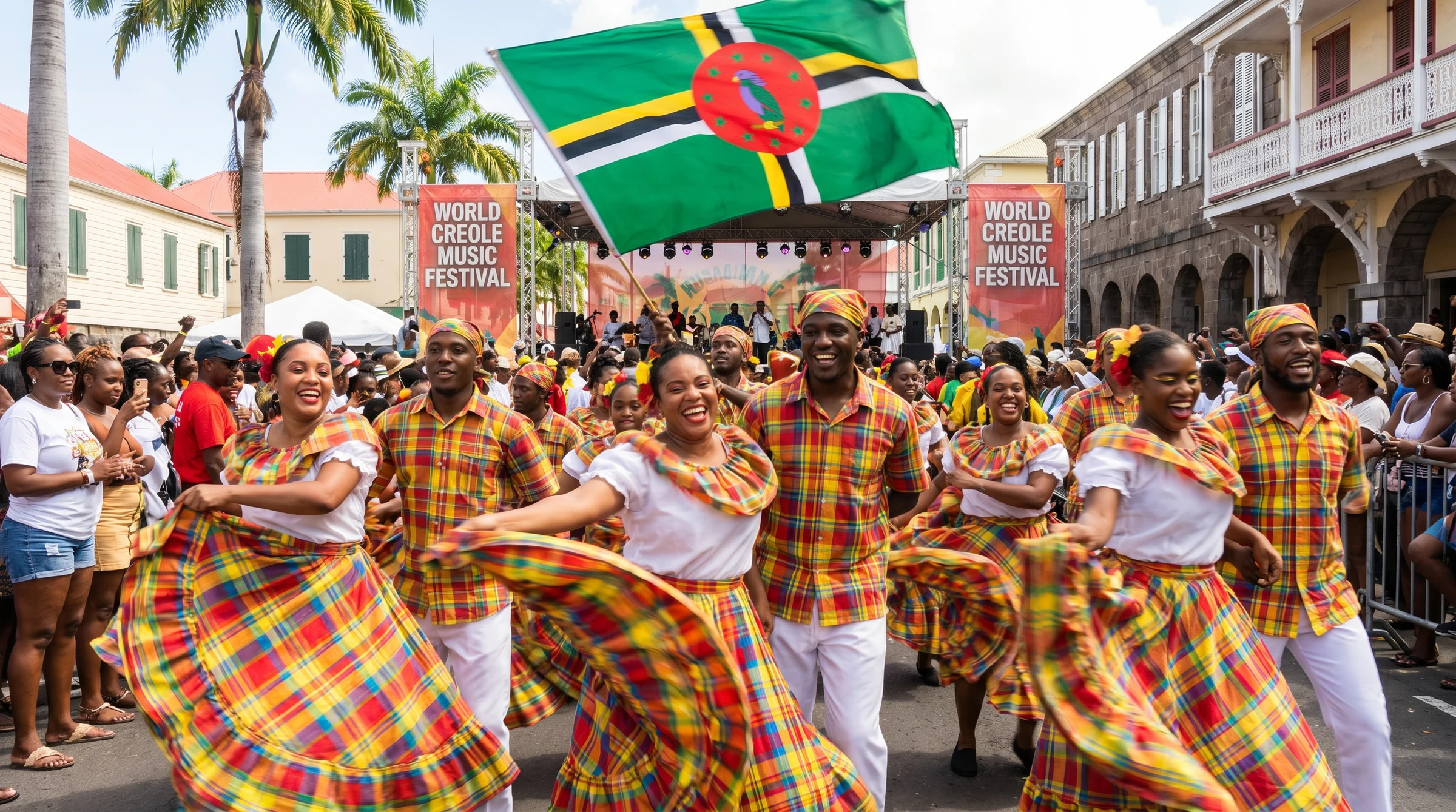
Mas Domnik celebrants in traditional madras dress.
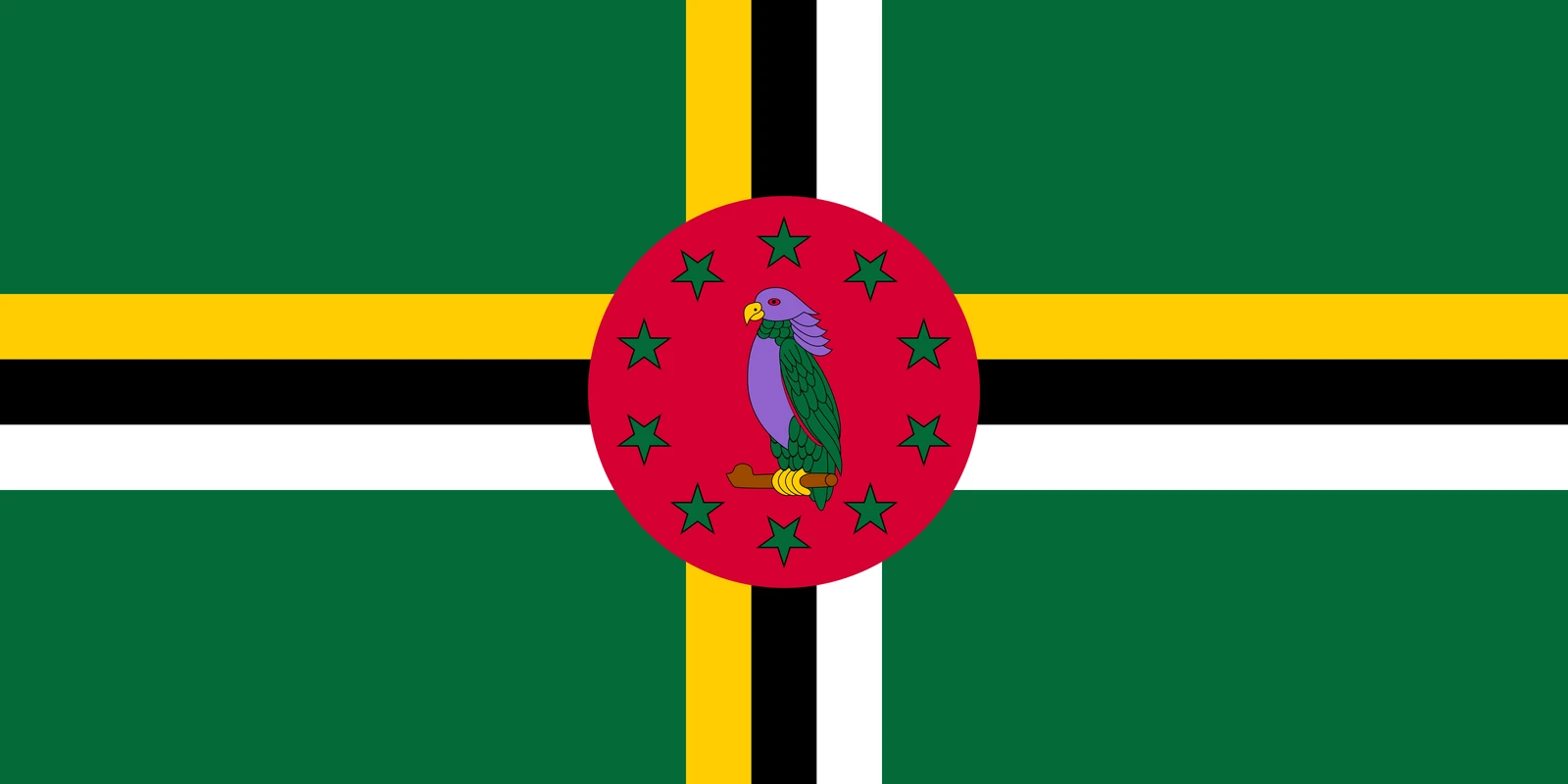
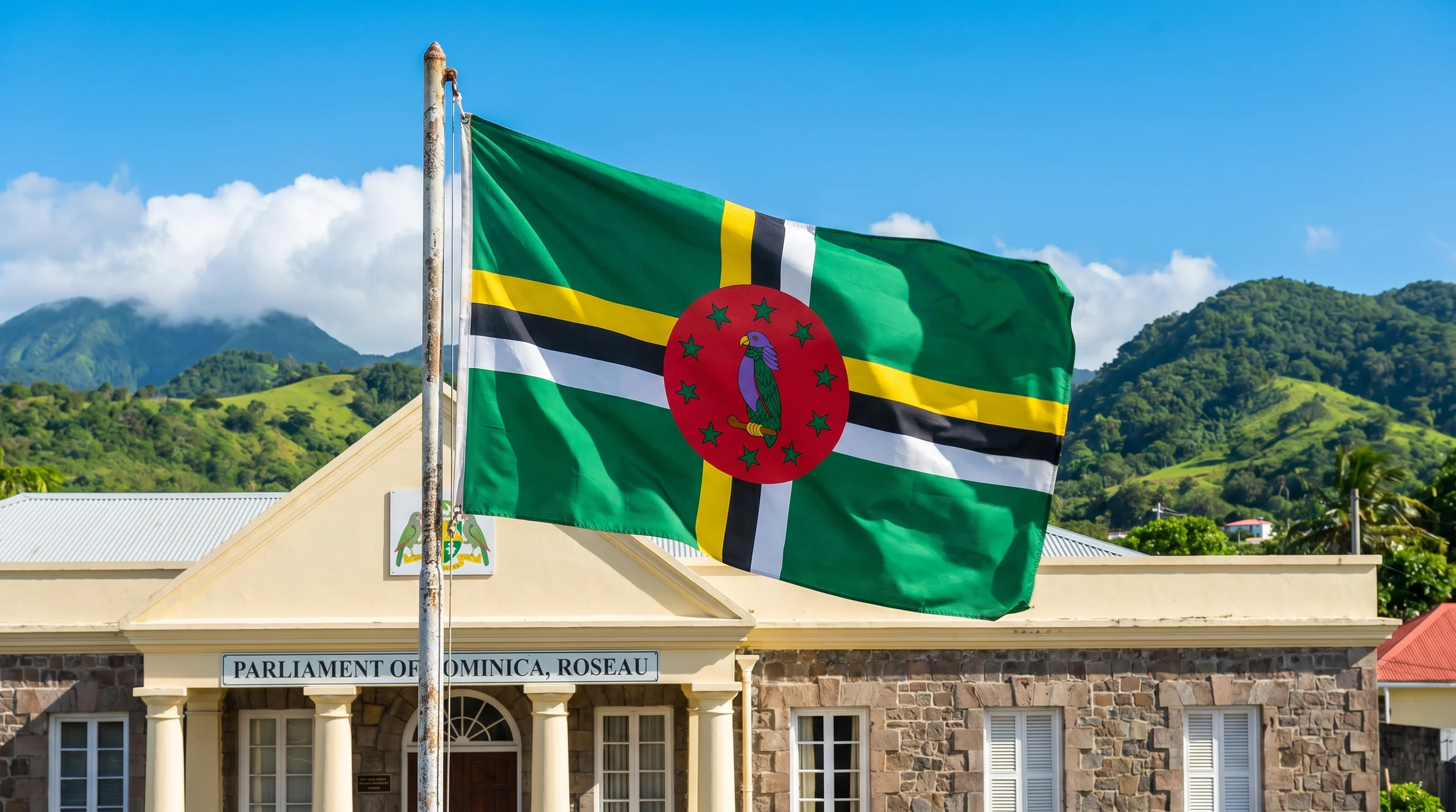
The flag of Dominica was adopted on 3 November 1978, the day the Commonwealth of Dominica achieved independence from the United Kingdom. It is one of only two national flags in the world that depict a parrot — the other being neighbouring countries’ regional emblems — and the only one that depicts the Sisserou parrot (Amazona imperialis), Dominica’s national bird, found nowhere else on Earth.
The Green Field
The flag’s background is a deep, saturated green — the colour of Dominica’s rainforests, which still cover roughly two-thirds of the island. Dominica is known across the Caribbean as the “Nature Isle”; the green is not abstract. It is the literal colour of the country as seen from above. The shade was chosen deliberately to read as forest, not as the lighter green of cultivated land.
The Triple Cross
A cross of three bands — yellow, black, and white — divides the flag into quadrants. The cross is Christian, reflecting the country’s predominantly Roman Catholic heritage, but each band carries its own meaning.
The yellow stands for sunshine — and for the country’s principal export crops, citrus and bananas, which colour the slopes between the rainforest and the coast.
The black stands for the rich volcanic soil of Dominica and for the African heritage of the majority of its people. As on the Antigua and Barbuda flag, black here is foundational — not a colour of mourning, but of origin.
The white stands for the clarity of the country’s rivers, which famously number 365 — one for every day of the year.
The Central Red Disc
At the centre of the cross sits a red disc. The red is for social justice — for the work, the labour, and the people whose hands built the country. It is the heaviest colour on the flag, and it is at the centre.
The Ten Stars
Around the disc, a ring of ten green stars on yellow represents the ten parishes of Dominica — Saint Andrew, Saint David, Saint George, Saint John, Saint Joseph, Saint Luke, Saint Mark, Saint Patrick, Saint Paul, and Saint Peter. The stars are equal in size and equally spaced, a deliberate statement that no parish ranks above another.
The Sisserou Parrot
At the very centre of the disc is the Sisserou parrot, the national bird, depicted in profile, looking left. The Sisserou is endemic to Dominica — it exists nowhere else in the wild — and is one of the world’s most endangered parrots. Its presence on the flag is more than ornamental. It is an act of national identity: a creature that exists only here, made the most central symbol on the national emblem.
The bird faces left rather than the more conventional right. This is the only national flag in the world that has been amended to face its emblem leftward (the original version had the parrot facing right, but the design was corrected in 1981 and again in 1988). The leftward facing has come to be associated, informally, with looking toward the future.
What It Stands For Today
In 2026, Dominica is in the middle of a long, deliberate rebuild — from the devastation of Hurricane Maria in 2017 to the country’s stated goal of becoming the world’s first climate-resilient nation. The flag carries that ambition. The forest, the soil, the rivers, the people, the ten parishes, and a parrot that exists nowhere else: a national emblem that is, in every element, distinctly Dominican.
For citizens by investment — including those who acquire Dominica citizenship through a non-refundable contribution to the Economic Diversification Fund — the same flag flies. The full rights of citizenship are extended without distinction.
Frequently asked questions
Why is the Sisserou parrot on the Dominica flag?
The Sisserou parrot (Amazona imperialis) is Dominica’s national bird and is endemic to the island — it exists nowhere else in the wild. Its presence at the centre of the flag is a deliberate act of national identity, placing a creature unique to Dominica at the heart of the country’s emblem.
What does the cross pattern on the Dominica flag represent?
The triple cross of yellow, black, and white reflects the country’s predominantly Christian heritage. Each band also carries its own meaning: yellow for sunshine and citrus, black for the volcanic soil and African heritage, and white for the clarity of Dominica’s 365 rivers.
What do the ten stars on the Dominica flag stand for?
The ten green stars represent the ten parishes of Dominica — Saint Andrew, Saint David, Saint George, Saint John, Saint Joseph, Saint Luke, Saint Mark, Saint Patrick, Saint Paul, and Saint Peter. They are equal in size and equally spaced, a deliberate statement that no parish ranks above another.
What does the green background on the Dominica flag symbolise?
The deep green field represents Dominica’s rainforests, which still cover roughly two-thirds of the island. Known across the Caribbean as the Nature Isle, Dominica’s flag uses a green chosen to read as forest rather than the lighter green of cultivated land.
If you would like to learn about the Dominica Citizenship by Investment programme, or to speak privately about whether the programme fits your circumstances, reach a senior advisor at PassPro.
Have a specific question?
A senior advisor will answer it directly. Free, no obligation.
Begin a Confidential Conversation